
Save the rhinos
Your Support is important
Sign Our Petition!
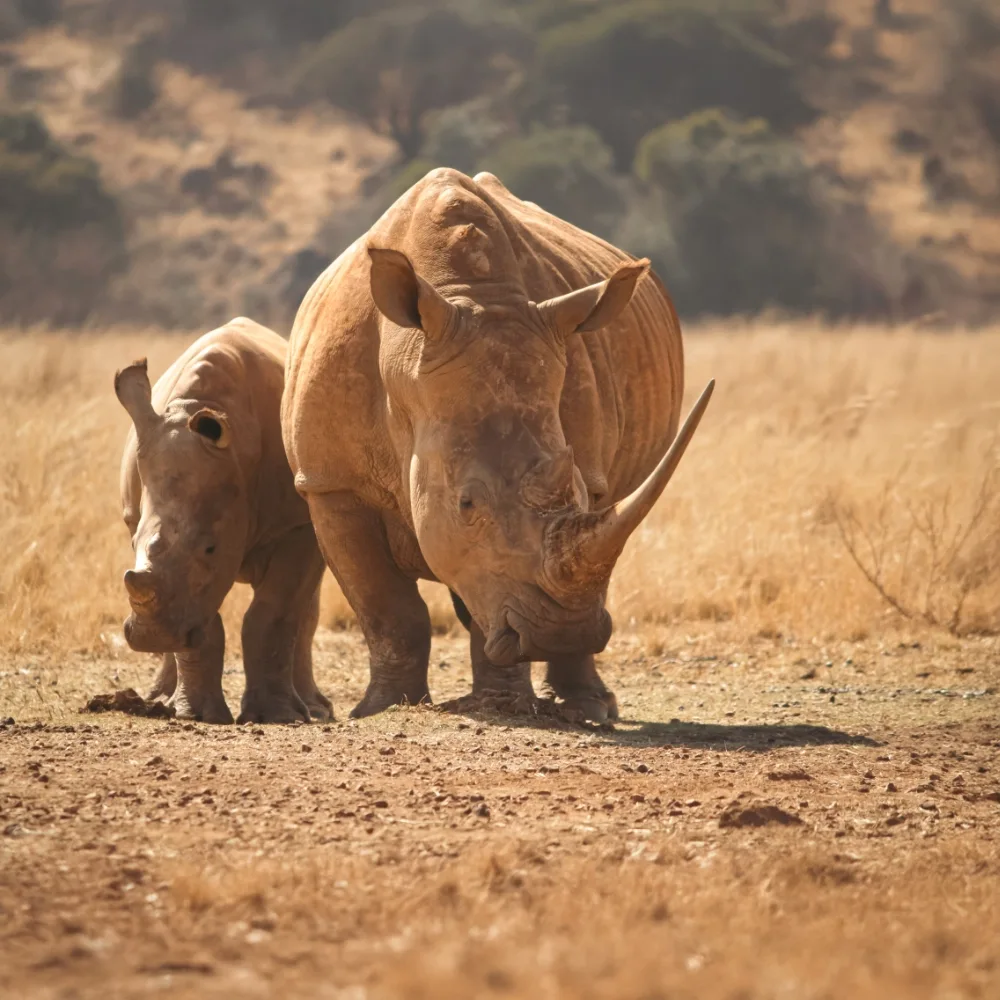
Rhinos are massive land animals, weighing up to 3 tons, with a small brain size of 400-600 g. They sport one or two keratin horns, akin to nails and hair, and possess thick collagen skin (1.5-5 cm), protecting against parasites. Often found near water puddles, they roll in mud for similar protection. These herbivores are primarily solitary, though some species gather in small female-dominated groups.[1] There are five rhino species globally, with three inhabiting tropical rainforests and the other two found in savannahs, shrublands, and grasslands, according to the IUCN.[2]
The problem
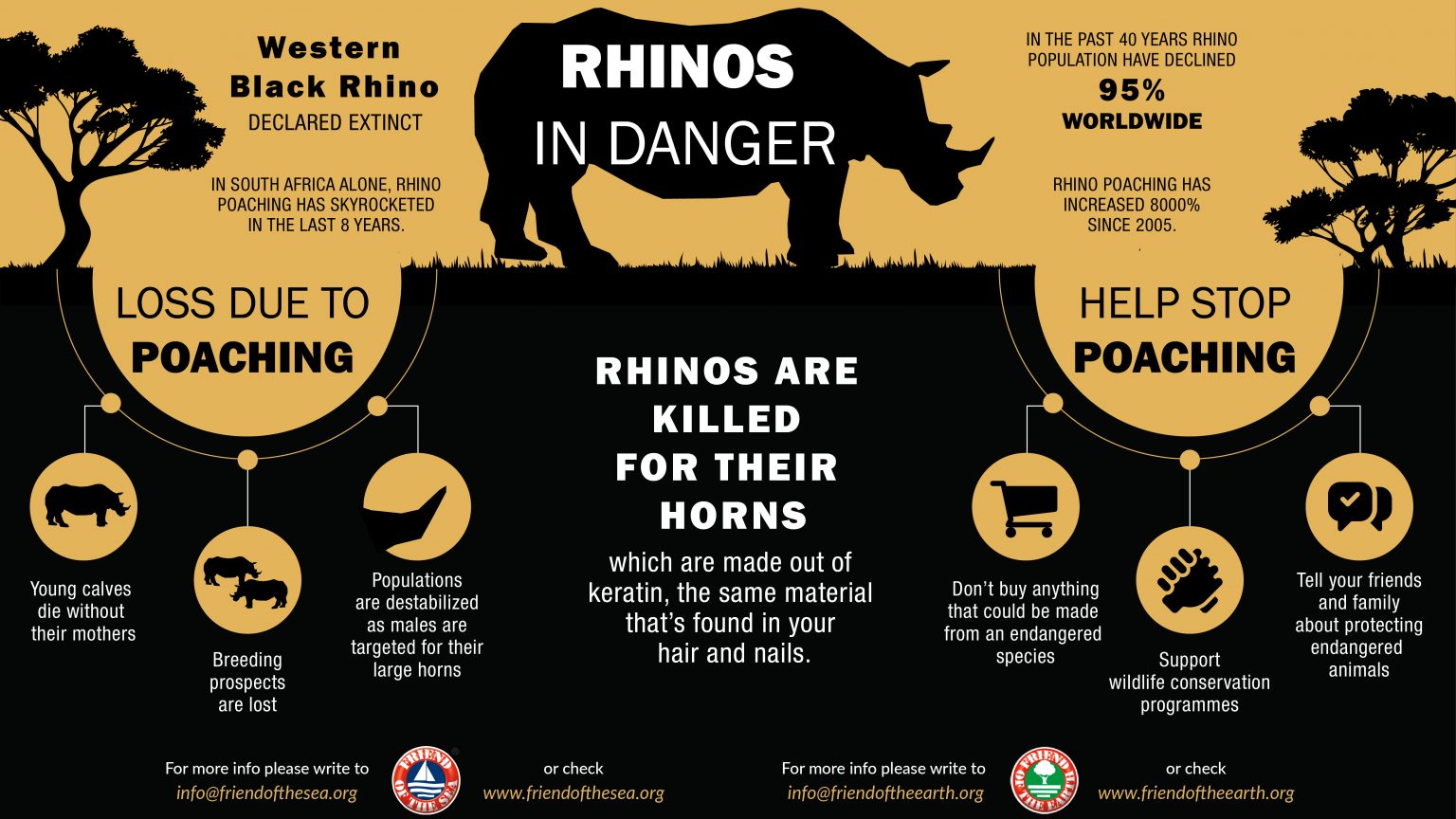
Rhinos face numerous threats including habitat loss, conflict with local populations, and poaching. In South Africa alone, 451 rhinos were illegally hunted in 2021, marking a worrying increase. To combat this, countries like South Africa, Botswana, Kenya, and India burn tons of rhino horns annually to signal their zero-tolerance stance on rhino part trade, often targeted for traditional medicine in As
Enviromental consequences
Rhinos, known as “ecosystem engineers,” play a critical role in controlling grassland turf and modifying landscapes through their diet. With Indian rhino numbers around 3,500, and only 70 Java rhinos, less than 80 Sumatra rhinos, and 5,500 black and 18,000 white rhinos remaining, their declining populations pose significant threats to ecosystem balance and shape.
Possible Solutions
Measures to preserve threatened rhino species include: site and habitat protection, prohibiting rhino horn trade, avoiding rhino products, captive breeding initiatives, taxonomic research, population monitoring using GPS and drone technologies, and enforcing international treaties like CITES (Convention on International Trade in Endangered Species). Comprehensive awareness campaigns through various media channels are also crucial for educating the public about rhino conservation.
WSF’s Activities and Initiatives
The World Sustainability Foundation’s Friend of the Earth project assists The Rhino Orphanage (TRO), a South African non-profit dedicated to rescuing, rehabilitating, and releasing orphaned rhinos. TRO’s efforts combat major threats like poaching and illegal horn trafficking. Our support aids TRO in all stages of rhino conservation, including fundraising, awareness, and facilitating the relocation of orphaned rhinos to a larger farm in Limpopo for better rehabilitation and eventual release into the wild.
References:
- Treccani: https://www.treccani.it/enciclopedia/rinoceronte/
- IUCN: https://www.iucnredlist.org/species/178979/1555025
- Ecologia e Comportamento Animale: https://www.libreriauniversitaria.it/ecologia-comportamento-animale-krebs-john/libro/9788833928265
- David Shepherd Wildlife Foundation: https://davidshepherd.org/rhinos/threats-to-rhinos/
- Save The Rhino: https://www.savetherhino.org/africa/south-africa/394-rhinos-poached-in-south-africa-during-2020/
- La Stampa: https://www.lastampa.it/la-zampa/altri-animali/2021/09/22/news/in-india-bruciati-2-500-corni-di-rinoceronte-sequestrati-ai-bracconieri-1.40729762/