
Save the bats
Your Support is important
Sign our petition!
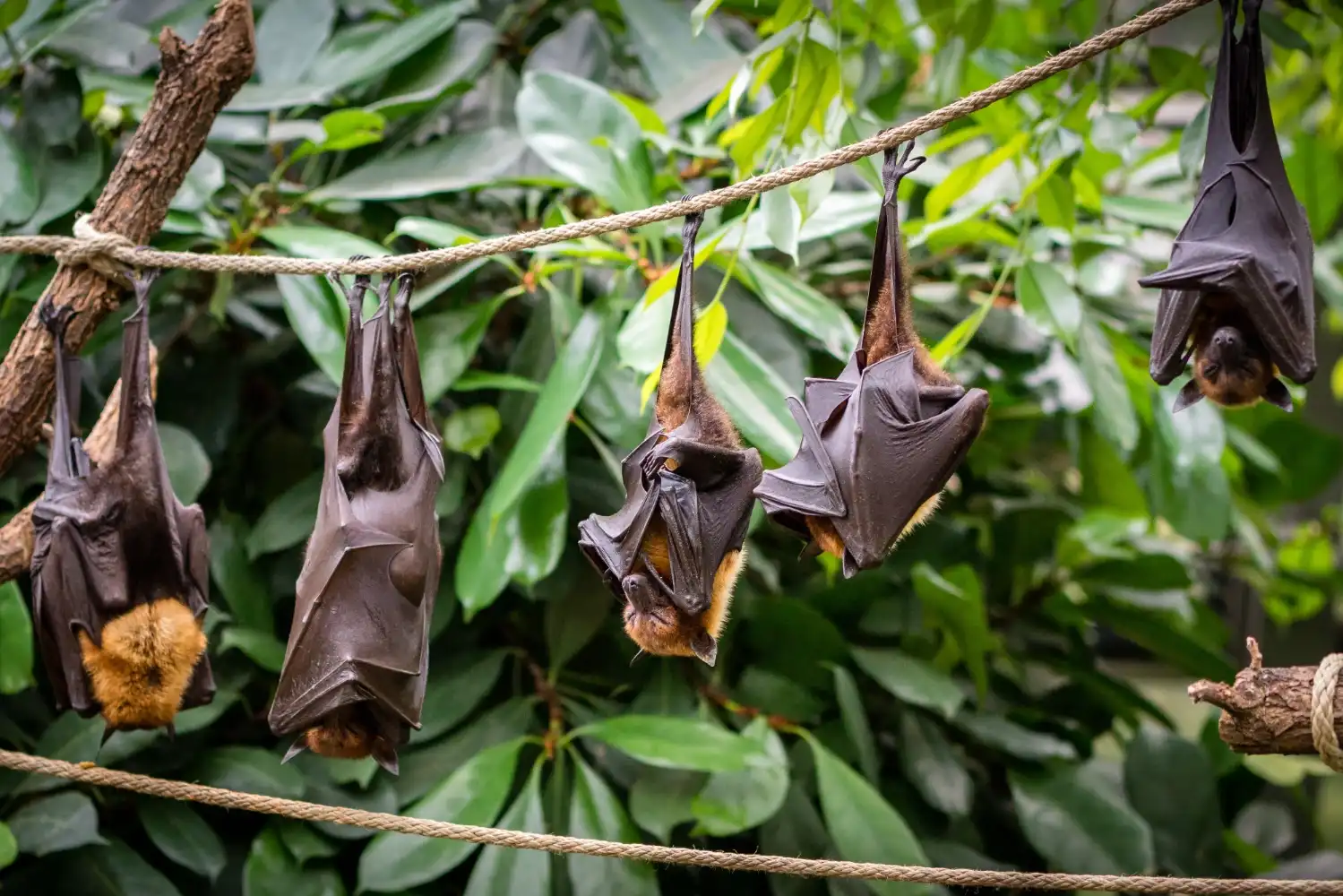
Bats, the only mammals capable of sustained flight, have forelimbs adapted into wings. Their unique mobility surpasses most birds, utilizing long finger membranes for flight. Crucially, bats play a vital role in ecosystems, especially amid deforestation and habitat disruption. They excel in dispersing seeds, aiding in ecosystem recovery.
The problem
The International Union for Conservation of Nature (IUCN) has assessed 1332 bat species. Gathering information on bat populations is challenging, hindering the ability to track changes effectively. Bats face stigma and mistreatment in many regions, while larger species are hunted for meat.
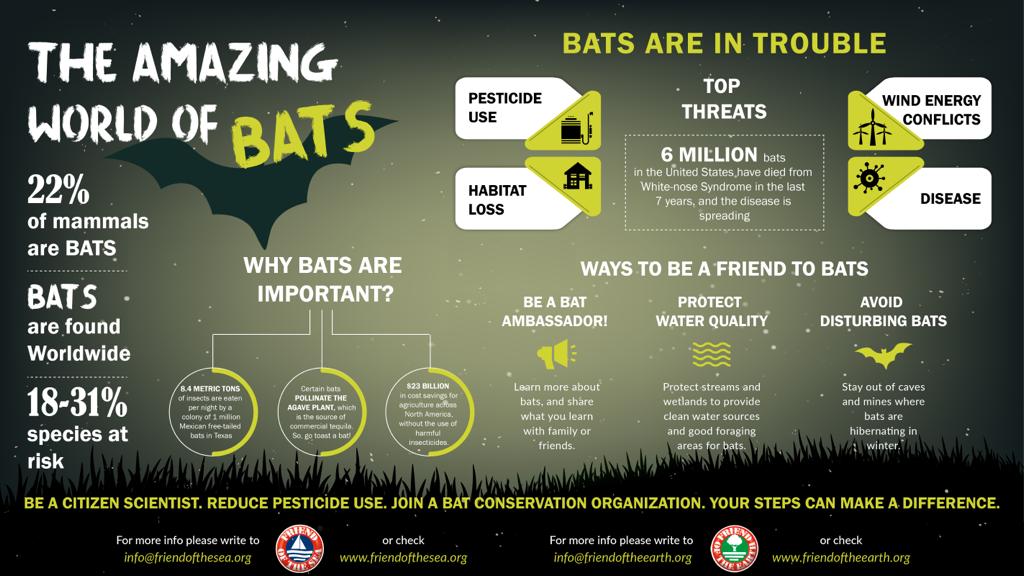
Habitat loss, primarily due to deforestation for farming and mining, poses a significant threat to bat populations worldwide. Inappropriate tourism and bat droppings mining further endanger their habitats. White-nose syndrome in the US and Canada and bat fatalities from wind turbines are additional threats. Domestic and feral cats also prey on bats, waiting outside roosts to pick them off.
Enviromental consequences
Nearly one-third of bats are threatened, with 23 species critically endangered, 84 endangered, and 110 vulnerable. The Lamotte’s Roundleaf Bat, with only six individuals remaining in 2004, faces threats from hunters and miners on Nimba mountain. Bats’ slow reproduction rate exacerbates the challenge of population recovery after crashes.
Bats play a crucial environmental role worldwide, aiding in seed dispersal, pollination, and maintaining plant diversity in tropical and desert ecosystems. Fruit-eating bats support local economies by enabling fruit production, especially in damaged rainforests where they excel in habitat restoration. Their droppings also serve as effective fertiliser.
Insectivorous bats are vital for controlling insect pests, potentially saving over $3.7 billion annually in crop damage and pesticide use in the US alone. Given their global presence and ecological importance, the extinction of bat species could have irreversible impacts on ecosystems worldwide.
Possible Solutions
Conservation initiatives are crucial to counter the myriad threats facing bats. Organizations worldwide are striving to protect bat species, tailoring strategies to the specific challenges in each region.
Preserving habitats is paramount, necessitating bat surveys before any alterations to forests or caves. Efforts to mitigate harmful tourism in bat caves and promote bat box usage in forests and gardens are underway.
While no solution has been found for white-nose syndrome, resources focus on monitoring and researching the disease. Campaigns aim to influence policy and minimise bat fatalities from wind turbines through technological innovations like ultrasound deterrents.
Changing cat owners’ behaviours is also targeted, advocating for indoor cat confinement during critical bat activity times and using deterrents like bells on outdoor cats.
WSF’s Activities and Initiatives
In 2022 the World Sustainability Foundation started a collaboration with Bat World Sanctuary, they are on the front line to end the mistreatment of bats. Each year they rescue hundreds of bats who might otherwise die. Lifetime sanctuary is given to non-releasable bats, including those that are orphaned, injured, and rescued from the exotic pet trade, zoos, and research facilities.
This project consists of distributing bat packs through libraries in the United States so that teachers from schools in the area can access them to make their students (ages 5 to 10) aware of the importance of bats.
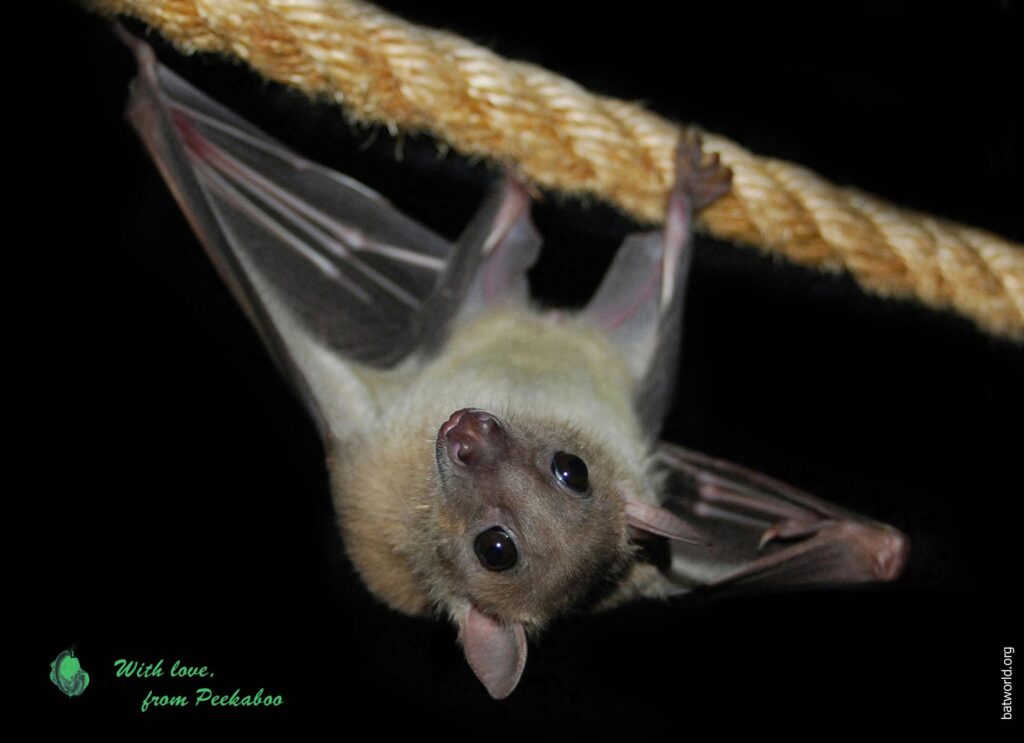
The Bat Pack would include several artefacts, activities, and literature to assist the curriculum and hopefully, get kids excited about bats. Along with our physical bat packs, we plan to create a virtual downloadable version containing activities, literature, and other online educational material that will be accessible to educators all across the world. The goal of this project would be to educate the next generation on the importance of bats and their conservation, foetering a love for bats from the start and correcting the myths that have plagued bats for far too long.
Call to action
- To help save this diverse group of animals, contribute to one of the many worthy bat-based conservation programmes.
- Look up bat conservation in your local area and there is bound to be some important conservation work underway, or else check out the work of Bat Conservation International.
- Why not write to your local council or energy company to ask what they are doing to help protect bats? Show decision-makers that you care about these incredible species, and they should too.
- Sign Friend of the Earth Change.org petition and choose only Friend of the Earth certified products to contribute to bats conservation. Support Friend of the Earth’s efforts by donating for bat conservation.
References:
- Cambridge University Press: https://www.cambridge.org/core/journals/journal-of-zoology/article/abs/diet-and-ecological-role-of-giraffe-giraffa-camelopardalis-introduced-to-the-eastern-cape-south-africa/C65D15AF66C1C22F75B9F39492C1A714