
Save the Forest Campaign

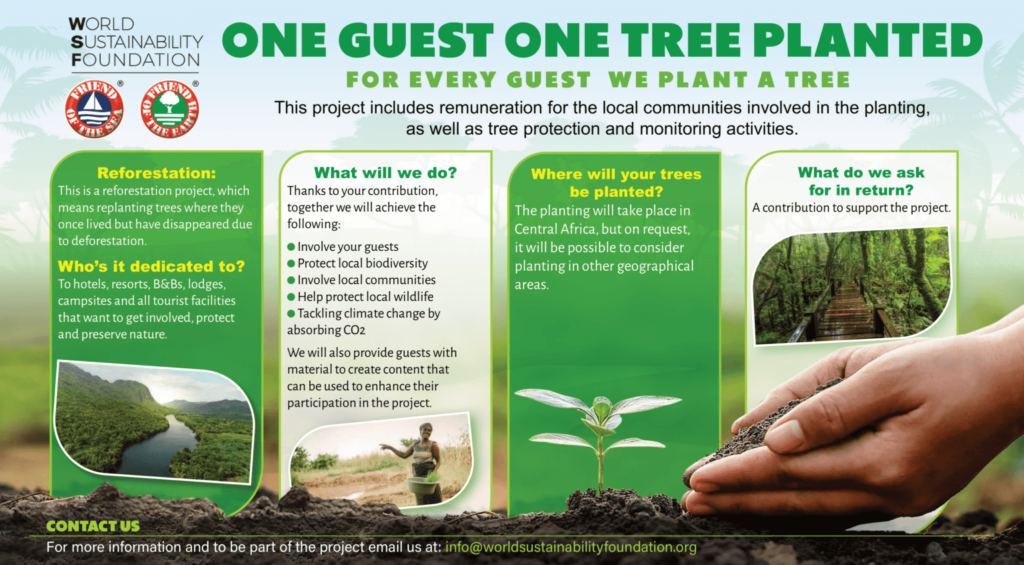
One Guest – One Tree Planted
We created a brand-new project whose goal is to plant a tree for every guest of tourist facilities such as hotels, resorts, B&Bs, campsites, etc.
Not travelling
Click here to Plant your Tree and support the reforestation project from afar.
Campaign
Sustainable Forest Management (SFM) is defined as “The stewardship and use of forests and forest lands in a way, and at a rate, that maintains their biodiversity, productivity, regeneration capacity, vitality, and their potential to fulfil, now and in the future, relevant ecological, economic and social functions, at local, national, and global levels, and that does not cause damage to other ecosystems” (Forest Europe 2016; Mackey et al. 2015).
The problem
Trends in the proportion of land area under forests is used as one of the indicators for the Millennium Development Goals (United Nations, 2008).
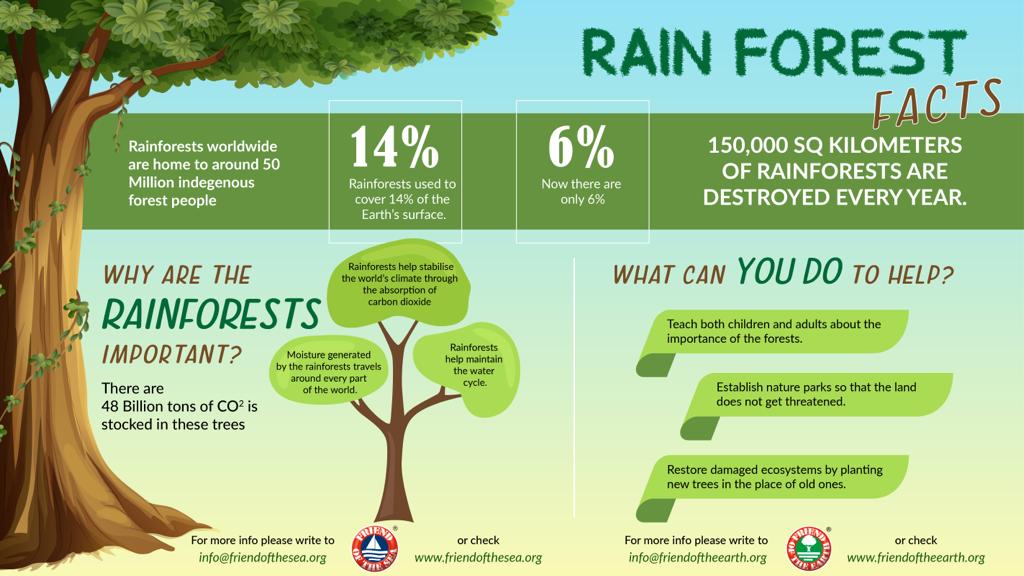
We are losing forests at a rate of 27 football fields a minute. That is a startling number. But the biggest problem for the world’s forests is not the outright clearing of forests, known as deforestation. It is degrading. Degraded forests are a problem, as they reduce their efficiency in keeping air and water clean, in providing wildlife with shelter and food, or in capturing carbon.
Key drivers for the loss of biodiversity and changes to forest ecosystems are:
Land-use change, especially through agriculture expansion, is the most destructive driver for the loss of the natural world on land, followed by the extraction and overexploitation of species like timber harvests and hunting.
The indirect drivers which are driving an unprecedented rate of global change in nature are:
- Growing human population
- Global economy
- Trade driving demand for energy and materials
- The wrong economic incentives with insufficient recognition of the values of ecosystem functions.
- Save the Forests
Enviromental consequences
Decades of exploitation have severely depleted Earth’s forests, with half of our global forested land already vanished. Unsustainable industrial activities, spanning from the Amazon to Canada and Indonesia, contribute significantly to large-scale degradation. The United Nations biodiversity report warns that most of the 2020 targets outlined in the Aichi biodiversity targets to protect nature will likely go unmet, jeopardising half of the UN’s Sustainable Development Goals (SDGs).
Possible solutions
Elephants, a conservation focus for decades, especially African ones, have seen progress. However, evolving threats require new protection strategies. Collaborating with governments and NGOs, efforts aim to curb habitat loss. Recent initiatives target human-elephant conflict reduction with innovative crop protection methods and outreach programs for conservation education.
- Through the recovery and promotion of knowledge and traditional methodologies,
- Through conservation and protected areas,
- Through governmental initiatives.
WSF’s Activities and Initiatives
The World Sustainability Foundation’s Friend of the Earth project provides financial support to Trees for the Future (TREES), a USA non-profit that is currently working with thousands of farming families across nine countries in sub-Saharan Africa.
Decades of unsustainable agriculture practices have resulted in degraded and unproductive land, nutrient-scarce food systems, and farming families who are unable to grow and sell enough to meet their most basic needs. Using the Forest Garden Approach in semi-arid countries like Senegal, Trees for the Future has proven that agroforestry is a solution to each of these challenges, effectively ending hunger and poverty while restoring the land and environment.
The aim of our collaboration is to plant a total number of 4.000 trees in Cameroon, Chad, and Mali.
Call to action
Everybody can contribute to preserving Forests by:
- Choosing Friend of the Earth certified products from sustainable agriculture and farming
- Sign Friend of the Earth Change.org petitions
- Advocate for forest preservation locally and to maintain flora biodiversity.